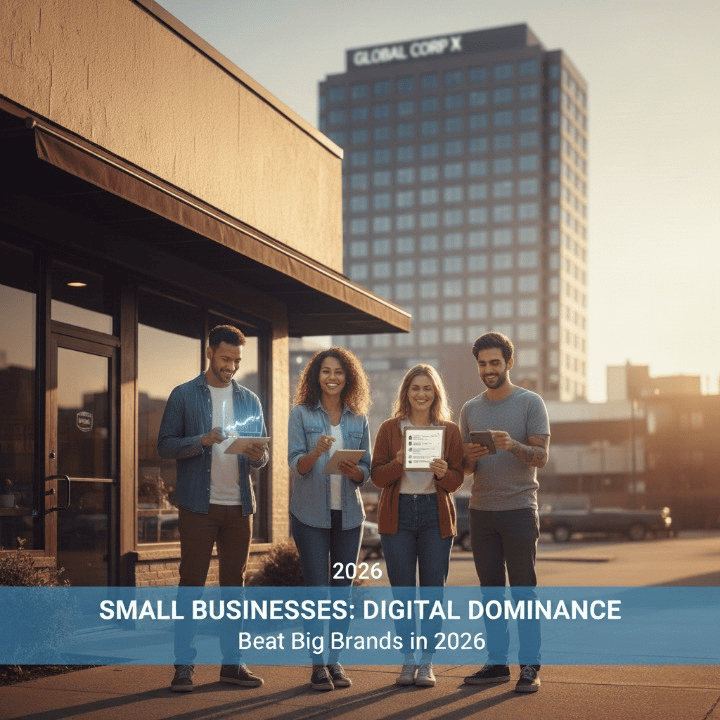

In 2026, digital marketing is no longer a level playing field—it’s a strategic battlefield. While big brands continue to invest millions in advertising, technology, and global reach, small businesses now have something just as powerful: agility, authenticity, and advanced digital tools.
At Walden Waves, we believe that size no longer determines success. Strategy does. With the right digital marketing approach, small businesses can not only survive—but outperform big brands.
This guide explores how small businesses can leverage modern digital marketing trends in 2026 to compete, grow, and dominate their niche.
1. Why Digital Marketing in 2026 Favors Small Businesses
The digital landscape in 2026 has shifted dramatically:
- AI tools are affordable and widely accessible
- Search engines reward quality and relevance, not just budget
- Consumers prefer authentic, human brands
- Hyper-targeted marketing reduces wasted ad spend
Unlike big corporations burdened by bureaucracy, small businesses can adapt faster, test quicker, and connect more personally.
2. Hyper-Personalization Powered by AI
In 2026, generic marketing no longer works. Customers expect brands to understand their needs instantly.
How Small Businesses Can Win:
- Use AI-driven CRMs for personalized email journeys
- Implement smart chatbots for real-time customer support
- Deliver personalized website experiences based on behavior
Big brands struggle to personalize at scale. Small businesses can excel by making every customer feel valued.
Walden Waves Tip: Even basic AI personalization can increase conversion rates by over 30%.
3. SEO in 2026: Competing Without Massive Budgets
Search Engine Optimization remains one of the most powerful tools for small businesses.
Modern SEO Strategies That Work:
- Focus on long-tail, intent-based keywords
- Optimize for voice search and AI search engines
- Publish authoritative, helpful content regularly
- Build topical authority within a niche
Google and AI-driven search engines prioritize expertise, experience, and trust (E-E-A-T)—not brand size.
4. Local SEO & Community-Driven Marketing
Big brands aim for global reach. Small businesses can own local and regional markets.
Winning Local Strategies:
- Optimize Google Business Profiles
- Collect authentic customer reviews
- Create location-specific content
- Partner with local creators and communities
In 2026, proximity-based searches and “near me” results drive massive intent-driven traffic.
5. Social Media: Authenticity Over Advertising
Consumers in 2026 are tired of over-produced ads. They want real stories, real people, and real value.
Platforms Small Businesses Can Dominate:
- Short-form video (Reels, Shorts, TikTok-style platforms)
- Community-based platforms
- Private groups and broadcast channels
Instead of polished corporate campaigns, small businesses can:
- Share behind-the-scenes content
- Engage directly with followers
- Build loyal micro-communities
💬 Engagement matters more than follower count.
6. Smart Paid Advertising with Smaller Budgets
Paid ads are still effective—if used strategically.
How Small Businesses Compete:
- Focus on high-intent keywords
- Use retargeting and remarketing
- Run short, data-driven ad tests
- Combine paid ads with organic content
Big brands often waste budget on broad campaigns. Small businesses can laser-target buyers who are ready to convert.
7. Content Marketing as a Trust Engine
In 2026, content isn’t just marketing—it’s brand currency.
Content Types That Drive Results:
- In-depth blogs and guides
- Educational videos
- Case studies and success stories
- Interactive tools and resources
Small businesses can position themselves as experts, not advertisers.
At Walden Waves, we help brands turn content into long-term digital assets that generate traffic, leads, and trust.
8. Marketing Automation Without Losing the Human Touch
Automation saves time—but human connection closes sales.
Best Practices:
- Automate repetitive tasks
- Personalize automated messages
- Keep real humans available for support
Small businesses can blend automation with personal interaction far better than large corporations.
9. Data-Driven Decisions, Not Guesswork
In 2026, analytics tools are affordable and powerful.
Small businesses should:
- Track user behavior
- Monitor conversion paths
- Continuously optimize campaigns
Big brands move slowly due to internal processes. Small businesses can pivot instantly based on real-time data.
10. Building a Brand, Not Just Selling Products
Consumers choose brands they trust and relate to.
How Small Businesses Stand Out:
- Share brand values and mission
- Communicate transparently
- Build emotional connections
Big brands often feel distant. Small businesses feel human—and that matters more than ever.
Final Thoughts: The Future Belongs to the Smart, Not the Biggest
In 2026, digital marketing success is no longer about who spends the most—it’s about who understands their audience best.
Small businesses that embrace:
- AI and personalization
- SEO and content marketing
- Authentic social engagement
- Data-driven strategy
will not just compete with big brands—they will outperform them.
At Walden Waves, we empower small businesses to ride the digital wave with confidence, creativity, and cutting-edge strategy.